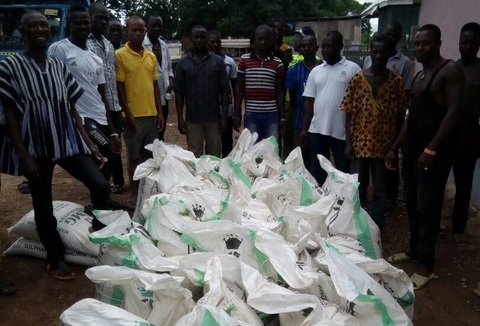
Wakawaka and its surrounding communities within the Bole district are largely farmers, shea nut traders, game hunters, and commercial firewood and charcoal producers. The main stay of these rural communities is rain-fed agriculture, which is worst affected by climate change due to erratic rainfalls and a shrinking growing season length. Increased deforestation and forest degradation as a result of unsustainable farming practices, slash and burn agriculture, unsustainable charcoal and fuelwood production, and fire hunting further pushes the communities into poverty.
In order to lessen environmental degradation and reduce poverty levels in the target project communities, Agrointroductions Ghana (AiG), with funding support of UNDP Global Environmental Facility Small Grant Program and local partners like the Ministry of Food and Agriculture, Forestry Commission, local authorities and community groups, employed an integrated approach for this project: stakeholder collaboration, capacity building, education and awareness creation, field school exercises, alternative livelihood provision, village savings and loans schemes, climate smart agriculture, and woodlot establishment.
Within a period of 24 months, the project recorded the following successes with the collaborative support of all project partners and stakeholders.
A total of 55 direct project beneficiaries and 72 community members were introduced to climate-smart agriculture, and subscribed to up-to-date mobile weather forecasts for the project period and beyond.
Another impactful component was introducing local farmers to conservation agriculture (minimum tillage, mulching, trees on farms). All beneficiaries who applied this concept confessed they harvested increased yields, though it was challenging to apply at large scale. Farmer beneficiaries were also supported with organic fertilizer and technical guides for application.
For the first time in the Bole district, the project trained 12 agriculture extension officers and 16 community-based agricultural extension agents on how to use New_Loclim Software (by FAO) for climate change mitigation and adaptation modeling.
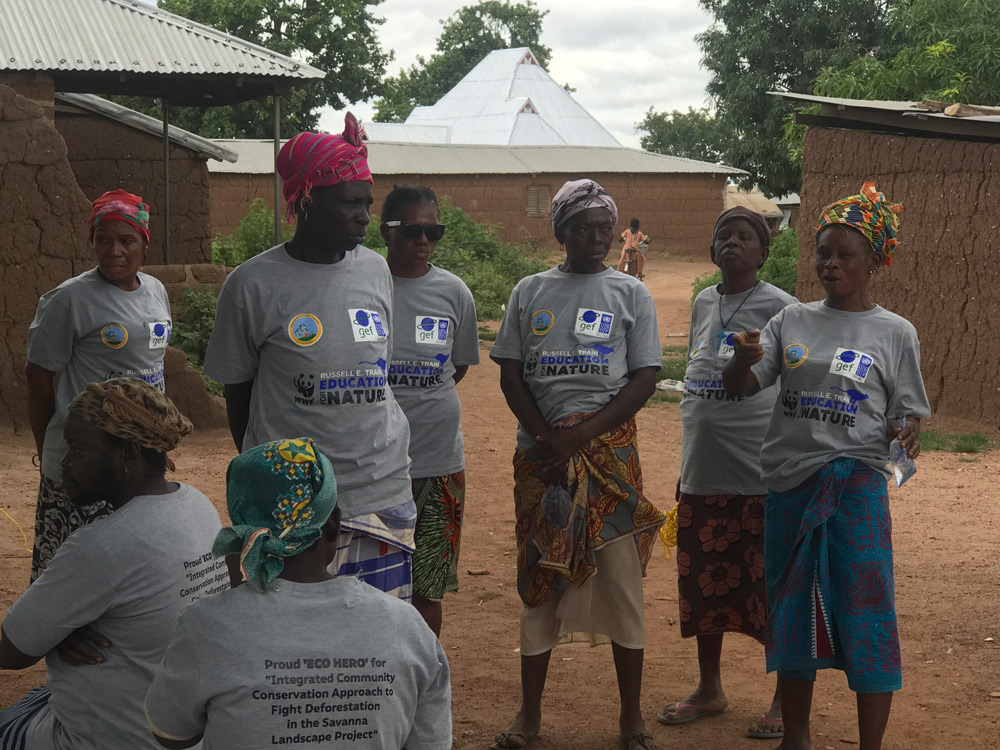
The livelihood diversification program trained and supported 30 women in vegetable farming, agroforestry, savings and loans, start-up seed funds for small businesses, and clay cook stove and fuel briquette making. A poultry farm was established as a demonstration center, starting with 250 birds.
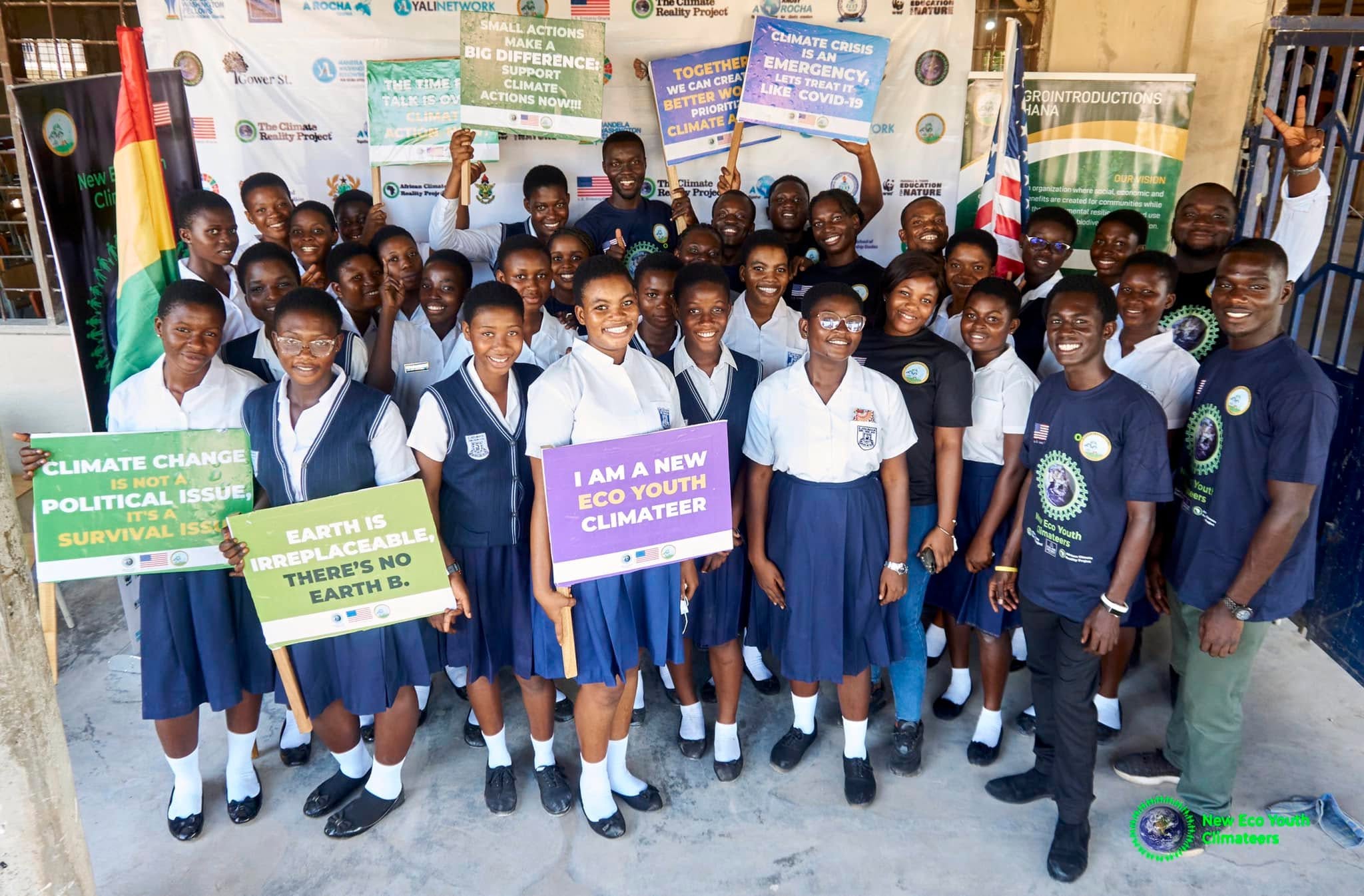
Sensitization of communities, schools and local authorities on climate change, deforestation, bushfires and biodiversity conservation achieved maximum participation. Over 200 school children were educated, a school environmental club was established, and community meetings and radio education programs were carried out in local dialects.
Beneficiaries were trained in indigenous tree and cash-crop seedling establishment and management, leading to a community seedling bank and woodlot plantation of over 6,000 trees and 5,000 cashew trees.
Project Impact
Youth involvement was very key to the success of the project. Youth groups formed about 60% of direct project beneficiaries and were given equal opportunities to engage in all aspects of project implementation, monitoring and sustainability.
Community management groups and institutions were created and strengthened to support project management, with a road map to ensure broad stakeholder implementation.
The project created sustainable livelihood investment opportunities through poultry farming, vegetable farming, cash crop farming, micro-credit schemes for women's groups, and fuel-efficient cook stove making, with special consideration given to gender and vulnerable women.
Capacity building trainings covered climate-smart agriculture, weather information subscription services, wildfire prevention and management, cashew nursery establishment and grafting, and poultry farm management.
Project Sustainability
The project's sustainability strategy rested on institutional, economic and environmental, and community dimensions — with local implementing teams assuming full responsibility for operations and maintenance, continuous flow of benefits to beneficiaries, and strong community participation in project activities.
Conclusion and Lessons Learned
Strong local commitment and participation was essential for effective implementation, helping the team gain trust and support from the community. Recognition of customary and traditional regulations was key to effective collective action.
Collaboration between beneficiaries considered landowners and those considered settlers was at times problematic and required careful role assignment and supervision. Misconceptions about financial rewards for committee involvement had to be addressed directly with chiefs and community leaders. The activities of herdsmen and open bushfires during the dry season remained an ongoing threat that beneficiaries took upon themselves to help police.