Phase I completed · Conservation · Sustainable Agriculture
ECO-SOIL: Enhancing Conservation of Soil Organic Lifeforms as Bioindicators in the Lake Bosomtwe Biosphere Reserve
Using soil organic lifeforms as bioindicators to assess ecosystem health and promote sustainable land management in the Lake Bosomtwe Biosphere Reserve.
About this project
The ECO-SOIL project is dedicated to enhancing conservation efforts within the Lake Bosomtwe Biosphere Reserve. By focusing on soil organic lifeforms as bioindicators, we aim to assess ecosystem health of different land-use types comprehensively.
The Lake Bosomtwe Biosphere Reserve, located in the Ashanti Region of Ghana, serves as the primary project site for our research. Situated at coordinates 6°31'N latitude and 1°25'W longitude, the biosphere reserve encompasses Lake Bosomtwe, a natural freshwater lake formed within a meteorite impact crater millions of years ago. The habitat within the Lake Bosomtwe Biosphere Reserve is characterized by a mosaic of land use types, including forest reserve, smallholder agricultural lands, agroforestry systems, natural vegetation, and peri-urban areas. The region experiences a tropical climate, with distinct wet and dry seasons, influencing agricultural practices and soil dynamics.
The conservation importance of the Lake Bosomtwe Biosphere Reserve lies in its rich biodiversity, including endemic plant species, diverse fauna, and unique ecosystems associated with the lake and surrounding areas. The reserve is recognized for its economic significance to local communities, serving as a source of livelihood. The forested areas within the reserve are vital for carbon sequestration, water regulation, and soil conservation, contributing significantly to regional climate resilience and ecological stability.
Moreover, the reserve holds cultural and spiritual significance for local communities, with traditional practices and beliefs intertwined with its natural heritage. Efforts to conserve the Lake Bosomtwe Biosphere Reserve are therefore not only ecologically imperative but also culturally and socio-economically significant for the surrounding communities.
ECO-SOIL project will specifically focus on smallholder farming areas within the reserve, where agricultural practices intersect with natural habitats. This interface presents both challenges and opportunities for biodiversity conservation, sustainable land management, and community livelihoods. By working closely with local stakeholders and leveraging scientific research, our project aims to enhance the conservation value of these critical landscapes while promoting sustainable agricultural practices and generate actionable insights and conservation strategies that benefit both biodiversity conservation and community well-being within the biosphere reserve.
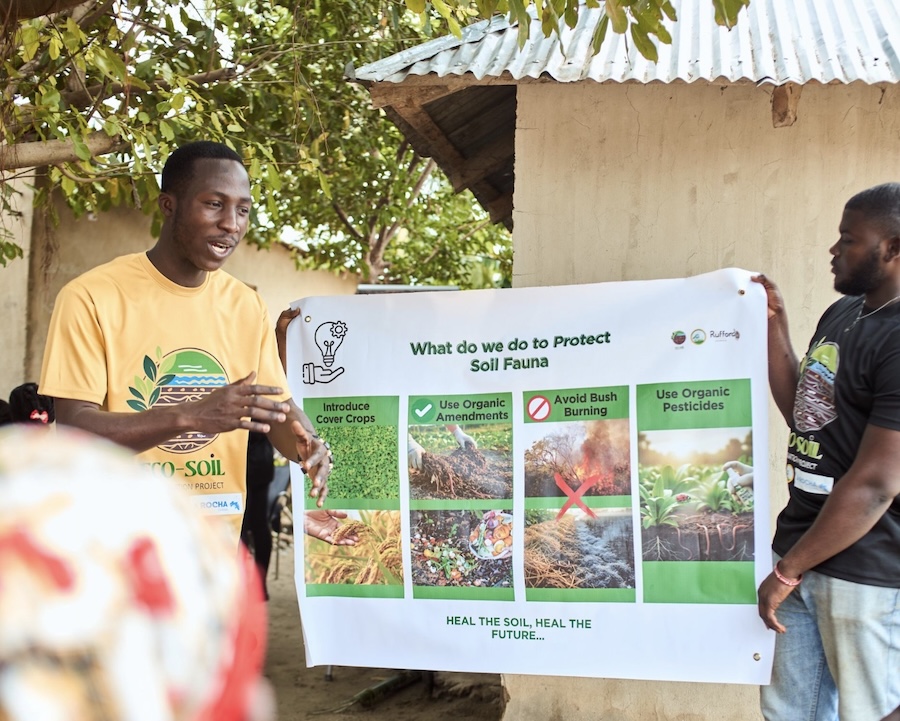
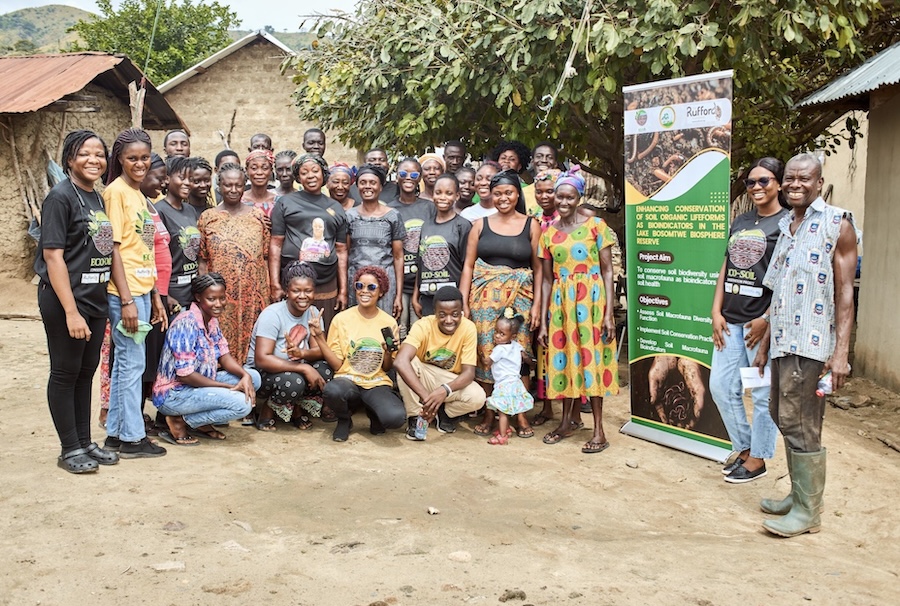
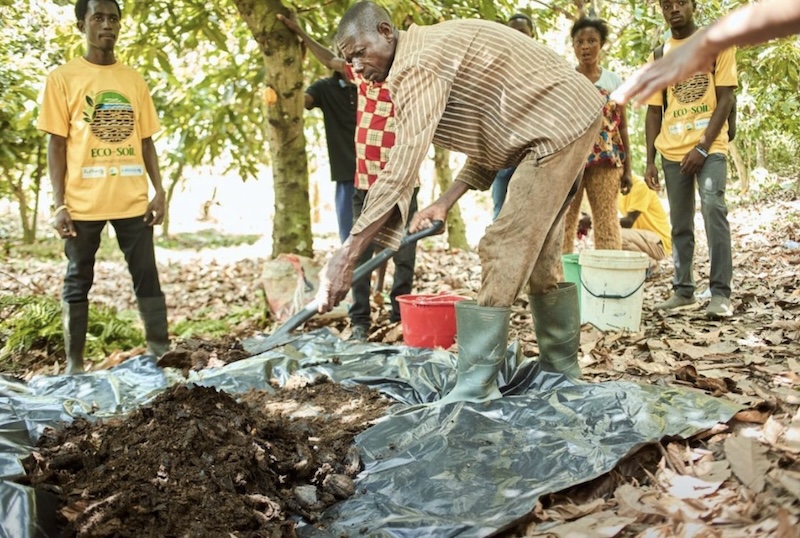
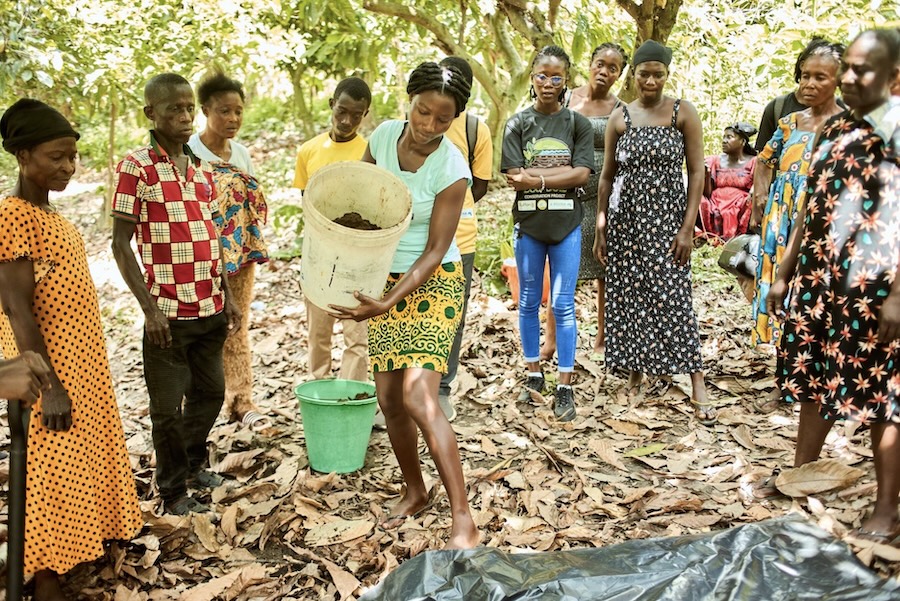
Our approach involves detailed soil sampling, macrofauna surveys, and extensive community outreach programs. Through these activities, we aim to promote sustainable land management practices among smallholder farmers while simultaneously conserving biodiversity and preserving soil fertility. By actively engaging stakeholders and implementing targeted conservation strategies, ECO-SOIL strives to make a significant and lasting contribution to the long-term ecological sustainability of the biosphere reserve.
Ecological zone
- Upper Guinean Forest
Restoration interventions
- Scientific research on soil organic lifeforms as bioindicators
- Conservation initiatives
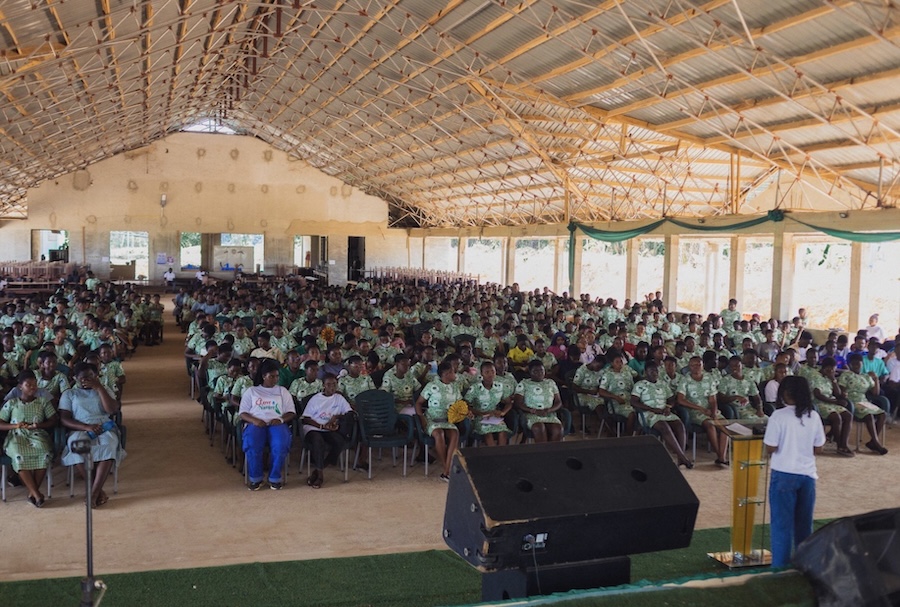
- Community and schools education programmes
- Sustainable agriculture
- Watershed management
- Natural resource management
Funders & partners
- The Explorers Club
- Stephenson Explorers Advancement Program
- Fisheries Commission
- Department of Fisheries and Aquaculture
- KNUST
Explore more
Our Impacts.
 Completed
Conservation · Restoration · Capacity Building
Promoting Innovative Agroecology & Conservation of Carbon Stocks
An agroecology programme connecting food production, healthy soils and carbon conservation.
Explore Project →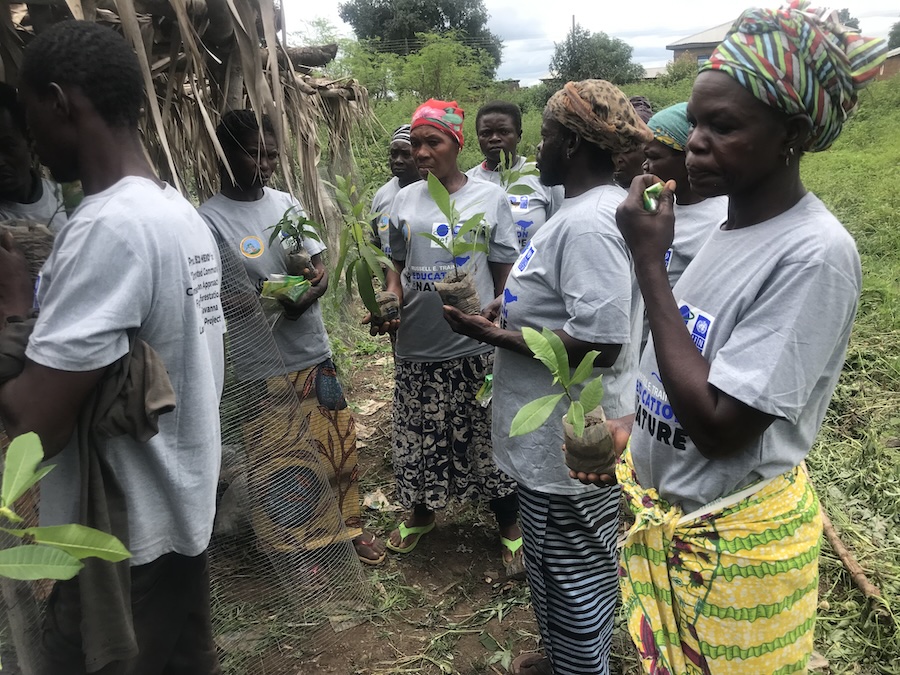 Completed
Restoration · Conservation · Community Empowerment
Integrated Community Conservation Approach to Fight Deforestation in the Black Volta Basin, Ghana
Restoring savannah landscapes in the Black Volta Basin through native tree planting, community resource management and conservation education.
Explore Project → Ongoing
Restoration · Capacity Building
Reforest Plus Project
A community-led restoration programme pairing native trees with green jobs, climate-smart nursery production and local stewardship.
Explore Project →